iHerb has strict sourcing guidelines and draws from peer-reviewed studies, academic research institutions, medical journals, and reputable media sites. This badge indicates that a list of studies, resources, and statistics can be found in the references section at the bottom of the page.
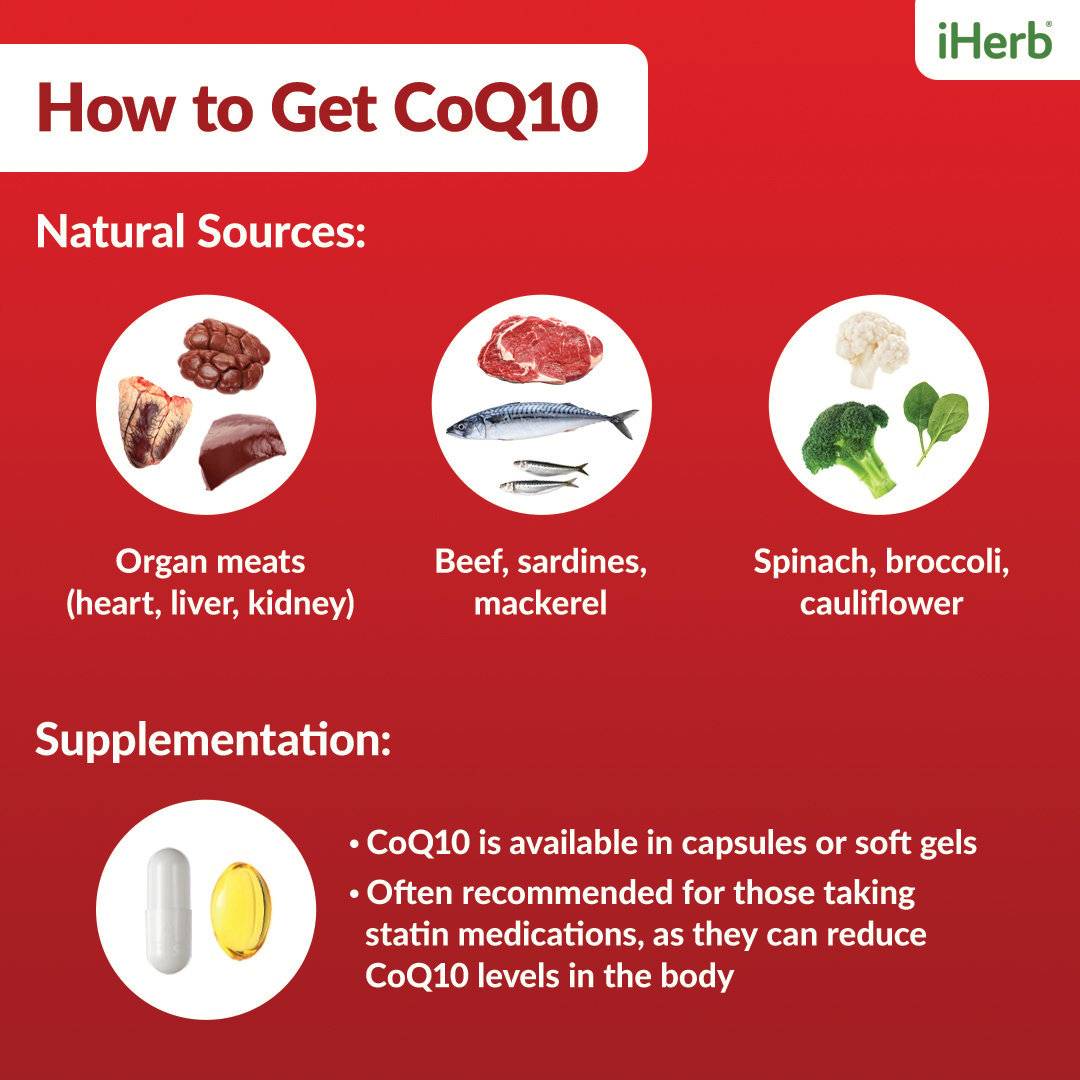
Effective Forms: Both ubiquinone (standard) and ubiquinol (more active) can help raise CoQ10 levels in the body.
How to Take It: Typical doses range from 100–200 mg daily. Always take CoQ10 with food to maximize absorption.
What Is CoQ10?
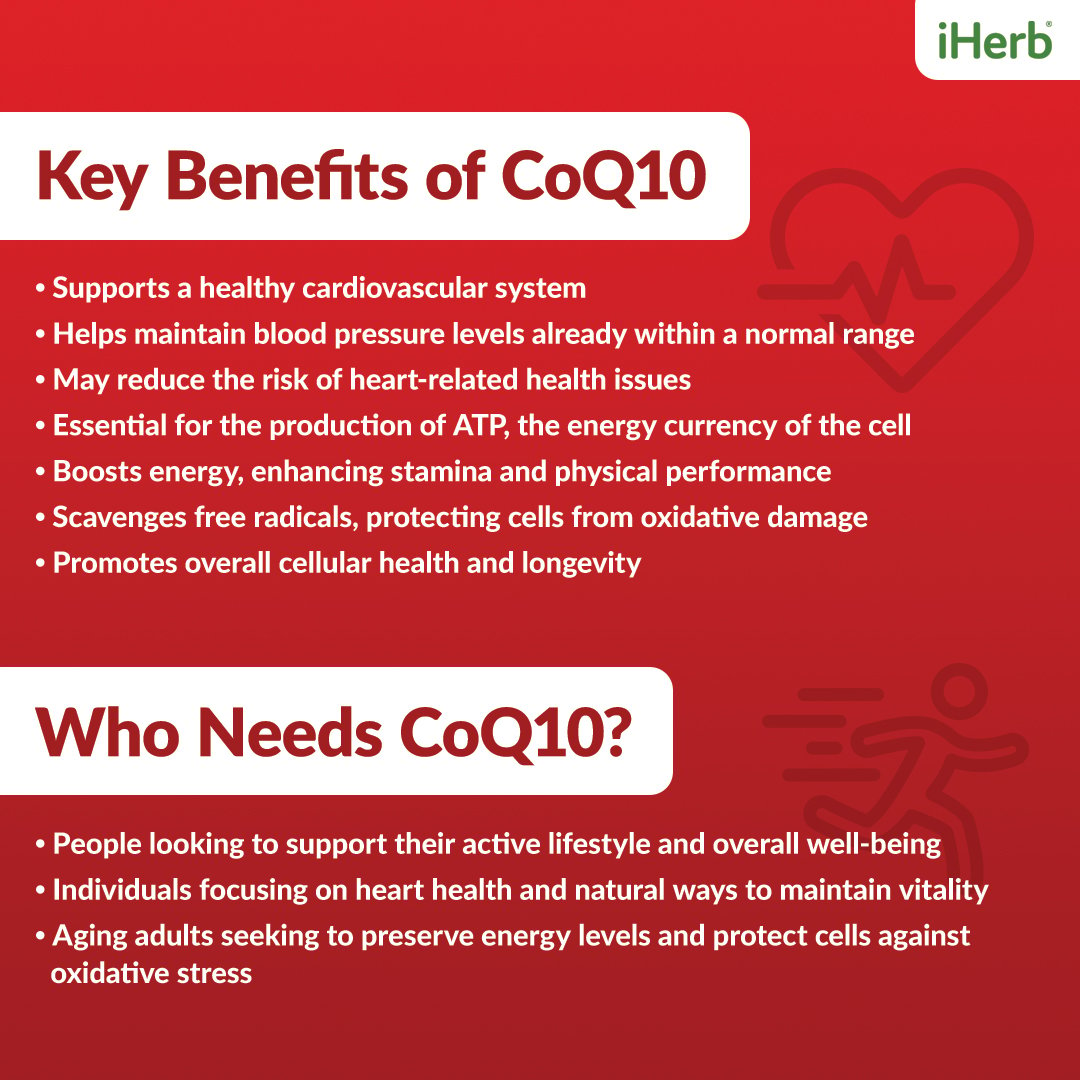
CoQ10 is an antioxidant in the body used in the production of energy by mitochondria, the energy-producing unit of the cells of our body.
Most of the time, the body produces enough CoQ10 on its own. But considerable research shows that there are many situations in which the body as a whole or certain tissues do not produce sufficient levels of CoQ10.
In particular, low CoQ10 levels are found whenever the heart or vascular system is stressed.1 Cholesterol-lowering statin drugs and several other drugs lead to lower CoQ10 levels. Most physicians are now aware of the importance of supplementing CoQ10 in their patients taking statins to prevent the drop in CoQ10 levels.2
Suboptimal CoQ10 levels are also observed during everyday biological stress and in individuals with suboptimal metabolic health. Lastly, people over 60 typically have lower CoQ10 levels, as cellular production declines with age. Fortunately, taking CoQ10 may help to support healthy CoQ10 levels.3
What Are the Health Benefits of CoQ10?
CoQ10 has emerged over the last 40 years as a best-selling dietary supplement based upon a very large body of scientific research highlighting potential health-supporting roles. Most of CoQ10's health benefits involve its ability to improve energy production and act as an antioxidant. As an antioxidant, CoQ10 protects cell structures against damage. It also helps to keep vitamin E in its active antioxidant form and increases the levels of key antioxidant enzymes that further protect cells from damage.4
Why is CoQ10 Important for Heart Health?
Human clinical trials have extensively documented the benefits of CoQ10 in supporting heart function. It is easy to understand why. CoQ10 is essential to heart cells, and whenever they are stressed or challenged, there is an increased demand for CoQ10.
Supplementation with CoQ10 in these situations simply supplies the demand. Clinical studies demonstrate that addressing suboptimal CoQ10 levels may support many aspects of cardiovascular function.5-7
Here are the key benefits noted in clinical studies with CoQ10 in improving the function of the heart:
Supports efficient oxygen utilization
Supports cellular energy production
Supports exercise performance
Supports healthy blood pressure already within the normal range
Again, supplementing with CoQ10 is especially important in people taking a statin drug to lower cholesterol. The biosynthesis of cholesterol and CoQ10 occurs via the same biochemical pathway. Statins block this pathway upstream of both CoQ10 and cholesterol. This blockage leads to lower levels of both cholesterol and CoQ10. With statin use, CoQ10 levels can drop by up to 50%.2
Because statin use can lower CoQ10 levels by as much as 50%, supplementing with CoQ10 can help replenish these essential nutrient stores and support overall daily energy.2
Food Sources of CoQ10
Foods rich in CoQ10 include meat, poultry, and fish. But the average daily dietary intake of CoQ10 is only 3 to 5 mg. This is nowhere near the amount required to significantly raise blood and tissue levels, making supplementation helpful for those with deficiencies.
What is The Best Form of CoQ10?
Most commercially available CoQ10 is primarily produced via a yeast fermentation process. CoQ10 is available in two interchangeable chemical forms in the body – ubiquinone and ubiquinol. These two forms are also available as dietary supplements, but once absorbed, the two forms are interchangeable. About 95% of the CoQ10 in the body is in the ubiquinol form. This form is the most active form. However, taking ubiquinone usually results in an easy conversion to ubiquinol in the body. So, either form ultimately raises blood ubiquinol levels.
Until 2007, CoQ10 as a dietary supplement was only available in the ubiquinone form. Ubiquinone is still the form used in the overwhelming majority of studies showing benefit from CoQ10 supplementation. These studies used ubiquinone for a wide range of indications, including supporting heart health. Ubiquinone is a crystalline powder that is insoluble in water and is difficult to absorb when given on an empty stomach. However, when taken with food (especially with oils), ubiquinone is absorbed at least twice as well as when taken on an empty stomach.9
The ubiquinol form does have better solubility and, as a result, slightly improved bioavailability than ubiquinone, but exactly how much better absorbed it is than ubiquinone has not been clearly determined.10,11 Fortunately, there is extensive information from published clinical studies that supports appropriate dosage recommendations for both forms.
Recommended CoQ10 Intake
CoQ10 dosages up to 100-200 mg/day in adults have been generally well tolerated in human clinical trials.
For people taking a statin drug or seeking general antioxidant support, the CoQ10 dosage is typically 100 mg for either form. For those with increased need, the dosage is 150 to 200 mg for ubiquinone and 100 to 150 mg for ubiquinol.
Be sure to take CoQ10 with food for maximum absorption. It typically takes 8 to 10 weeks of consistent daily supplementation before noticeable clinical improvements are seen.
Side Effects and Drug Interactions of CoQ10
While CoQ10 is exceptionally safe and well-tolerated (even long-term), safety during pregnancy and lactation has not been definitively proven. It should only be used by pregnant or nursing women if a physician determines that the benefits outweigh the risks
In addition to statins, other drugs may lower CoQ10 levels by blocking its synthesis. These include other cholesterol-lowering drugs as well as beta-blockers, phenothiazines, and tricyclic antidepressants.
Frequently Asked Questions About CoQ10
How should I take my CoQ10 supplement?
You should always take CoQ10 with food. Because it is a fat-soluble nutrient, taking it with a meal—especially one that contains healthy fats or oils—makes it at least twice as easily absorbed by the body compared to taking it on an empty stomach.
Why is CoQ10 so important for people taking statins?
Cholesterol and CoQ10 are produced via the exact same biochemical pathway in the body. When statin medications block this pathway to lower cholesterol, they also inadvertently reduce CoQ10 levels by up to 50%. Supplementing helps replenish this essential energy-producing nutrient.
What is the difference between ubiquinone and ubiquinol?
Both are effective forms of CoQ10. Ubiquinone is the standard form used in the vast majority of clinical research. Ubiquinol is the active form and boasts slightly better solubility and bioavailability. However, your body readily converts standard ubiquinone to active ubiquinol once absorbed, so both forms effectively raise your blood levels.
What is the recommended daily dosage of CoQ10?
For general antioxidant support and for those taking a statin drug, a dosage of 100 mg daily is standard. For individuals with increased cardiovascular needs, the typical dosage is 150 to 200 mg of ubiquinone, or 100 to 150 mg for ubiquinol.
Can other medications deplete CoQ10 levels?
Yes. In addition to statins, other medications that may lower your body's natural CoQ10 levels include beta-blockers, certain other cholesterol-lowering drugs, phenothiazines, and tricyclic antidepressants.
References:
Sue-Ling CB, Abel WM, Sue-Ling K. Coenzyme Q10: A Systematic Review. J Nutr. 2022 Jul 6;152(7):1666-1674.
Kloer HU, Belardinelli R, Ruchong O, Rosenfeldt F. Combining Ubiquinol With a Statin. Heart Lung Circ. 2020 Feb;29(2):188-195.
Díaz-Casado ME, Quiles JL, Barriocanal-Casado E, et al. The Paradox of Coenzyme Q10 in Aging. Nutrients. 2019 Sep 14;11(9):2221.
Akbari A, Mobini GR, Agah S, et al. Coenzyme Q10 supplementation and oxidative stress parameters: a systematic review and meta-analysis of clinical trials. Eur J Clin Pharmacol. 2020 Jun 25.
Martelli A, Testai L, Colletti A, Cicero AFG. Coenzyme Q10. 2020 Apr 22;9(4):341.
Xu J, Xiang L, Yin X, Song H, Chen C, Yang B, Ye H, Gu Z. Efficacy and safety of coenzyme Q10. BMC Cardiovasc Disord. 2024 Oct 26;24(1):592.
Alarcón-Vieco E, Martínez-García I, Sequí-Domínguez I, Rodríguez-Gutiérrez E, Moreno-Herráiz N, Pascual-Morena C. Effect of coenzyme Q10 on cardiac function. Food Funct. 2023 Jul 17;14(14):6302-6311.
Kovacic S, Habicht SD, Eckert GP. Effects of coenzyme Q10 supplementation: a systematic review and meta-analysis. J Nutr Sci. 2025 Oct 10;14:e72.
Ochiai A, Itagaki S, Kurokawa T, et al. Improvement in intestinal coenzyme q10 absorption by food intake. Yakugaku Zasshi. 2007 Aug;127(8):1251-4.
Hosoe K, Kitano M, Kishida H, et al. Study on safety and bioavailability of ubiquinol (Kaneka QH) after single and 4-week multiple oral administration to healthy volunteers. Regul Toxicol Pharmacol. 2007 Feb;47(1):19-28.
Zhang Y, Liu J, Chen XQ, Chen CY . Ubiquinol is superior to ubiquinone to enhance Coenzyme Q10 status in older men. Food Funct. 2018 Nov 14;9(11):5653-5659.
DISCLAIMER:
These statements have not been approved by the Food and Drug Administration. These products are not intended to diagnose, treat, cure, or prevent disease.
Shop This Article
Keep Learning
8 Natural Products and Home Remedies for Heartburn and Acid Reflux
by Dr. Michael Murray, N.D.
163,091 Views
Support Heart Health with These 4 Doctor-Approved Habits
by Dr. Candace Mathers, N.D.
15,808 Views
CoQ10 Health Benefits
by Dr. Michael Murray, N.D.
154,459 Views
5 Tips To Help You Support Heart Health
by Dr. Gabriel Espinoza, M.D.
109,449 Views
What Does The Research Say About Omega-3 Fatty Acids and Heart Health?
by Dr. Eric Madrid, M.D.
39,142 Views
Natural Approaches To Support Healthy Blood Pressure



















































 Table of Contents