What Is High Blood Pressure?
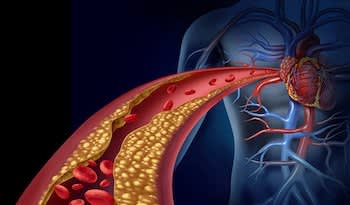
High blood pressure, also known as hypertension, is a common condition that requires the heart to pump harder than desired due to increased pressure and stiffness in the arteries. Affecting hundreds of millions of people worldwide — one in every four adults — this condition often causes no symptoms, leaving many with high blood pressure undiagnosed. For this reason, hypertension has been called “the silent killer”. High blood pressure is known to increase the risk of heart attack, stroke, heart failure, and kidney disease, especially if left untreated.
Blood pressure consists of two numbers, traditionally measured in millimeters of mercury (mmHg). The first number is the systolic blood pressure, and the second is the diastolic pressure. Blood pressure is expressed as 120/80 (systolic/diastolic).
- Systolic blood pressure: the pressure your heart exerts on your arteries when pumping.
- Diastolic blood pressure: the pressure in the arteries when the heart is at rest.
Those with high blood pressure need to be under the care of their personal physician.
Blood Pressure Ranges:
- Normal blood pressure: <120 / 80
- Elevated Blood Pressure: >120-129/ 80-89
- Hypertension (Stage 1): 130-139/ 80-99
- Hypertension (Stage 2): Over 140/90
*Values are different for children
What Causes Hypertension?
There are many causes of hypertension, including lack of physical activity, poor diet, overweight, obesity, insulin resistance, prediabetes, diabetes, kidney disease, certain medications, and genetics. However, it may occur as a consequence of aging without any other specific cause present.
Can High Blood Pressure Be Managed?
If you are in the elevated or stage 1 blood pressure range, lifestyle changes may be sufficient to help normalize your blood pressure. There are times when people with newly diagnosed hypertension can be treated solely with improvements in diet and exercise. However, this is usually reserved for those with few risk factors and who are dedicated and willing to make immediate lifestyle changes, including home blood pressure monitoring with a digital blood pressure monitor.
Diets rich in vegetables, nuts, and fresh fruits can be beneficial because they provide potassium, magnesium, and calcium, all of which help bring balance and health to the circulatory system.
Conventional Blood Pressure Therapy
Thanks to advances in science and the pharmaceutical industry, physicians and patients have been able to treat high blood pressure and, subsequently, reduce the dangers associated with it. Over the last several decades, high blood pressure medications have been the primary means of reducing elevated blood pressure.
There is little question about the effectiveness of commonly used blood pressure medications. Side effects are a common concern for many. In most instances, however, the benefits outweigh the risks. Frequently, a person will take two or more medications from different classes to control their blood pressure.
Natural Therapies For Healthy Blood Pressure
- A diet rich in vegetables and fruits
- Weight loss
- Stress reduction and routine exercise
- Meditation and relaxation techniques, including prayer
- Supplements
Supplement For Healthy Blood Pressure Support
Below, we will discuss supplements that have been shown to help support healthy blood pressure already within the normal range. If you are on prescription medications, consult your personal physician before starting a supplement, as adjustments to your medications may be necessary.
Beetroot Juice Extract
Many vegetables, including beets, contain a high concentration of nitrates, which, when consumed, can be reduced to nitrites by bacteria commonly present in the human mouth. The nitrites are dissolved in saliva, swallowed, and absorbed into the blood, where they are converted into nitric oxide, which supports healthy blood flow and circulation. Beetroot juice and its extract, specifically, contain a high concentration of inorganic NO3.
A 2012 study in The British Journal of Nutrition compared the intake of beetroot to a placebo. The results showed significant support for healthy blood pressure levels already within the normal range when at least 100 grams of beetroot was consumed. A 2013 study in the Journal of Nutrition showed that consumption of beetroot juice, rich in inorganic nitrates, resulted in a benefit on systolic blood pressure. In total, 254 people were included in the studies reviewed.
A 2014 study evaluated the effect of beetroot supplementation in overweight subjects. Those who took the concentrate saw significant support for cardiovascular health and healthy blood flow. Further, a 2016 study in the European Journal of Nutrition showed that beetroot supplementation improved endothelial function, which likely explains the mechanism by which it supports cardiovascular health.
Lastly, a 2017 meta-analysis study in Advances in Nutrition showed that beet juice consumption provided significant support for healthy blood pressure levels already within the normal range.
Suggested dose: As directed on the label.
Coenzyme Q10
Co-enzyme Q10 (CoQ10), also known as ubiquinone, is a naturally occurring antioxidant nutrient required for life. Coenzyme Q10 is necessary for cells to generate energy. This is primarily done in the mitochondria, the cellular “powerplant” that generates energy in the body.
Since the heart is the most active organ, it requires and produces the most CoQ10 to meet its metabolic demands. However, in those with cardiac disease, higher levels of CoQ10 are required to help optimize function.
A 2015 double-blind, randomized controlled study of male Japanese athletes who took 600 mg of CoQ10 per day showed that healthy blood pressure levels within the normal range were achieved after 10 days.
Mayo Clinic also backs the use of CoQ10 for cardiovascular support, as did a 2015 study in the Annals of Medicine. However, a 2016 Cochrane review did not find a significant benefit for maintaining blood pressure.
The effect might be nuanced. A 2018 study, which looked at 17 randomized controlled trials that included 684 participants, concluded that CoQ10 supplementation may help maintain healthy Systolic Blood Pressure (SBP) levels in individuals seeking metabolic support.
Suggested dose: 100 mg to 300 mg daily. Up to 600 mg may be beneficial.
Hawthorn Berry
Hawthorn berries are small fruits that grow on shrubs or trees that belong to the crataegus genus. They have been used for medicinal purposes for hundreds of years and can be traced back to Traditional Chinese Medicine (TCM). These berries have been used for heart health, blood pressure, and also for digestive issues. Hawthorn berries are loaded with antioxidants, specifically polyphenols, which support a healthy inflammatory response
A 2002 study of 36 people with high blood pressure showed that 500 mg of hawthorn berry could help support healthy blood pressure levels already within the normal range. However, this study did not show a benefit on systolic blood pressure, the top number.
A 2006 study in the British Journal of General Practice showed the benefit of hawthorn berry in supporting overall blood pressure values. In the study, 79 patients seeking metabolic support were separated into two groups. Thirty-nine patients were given 1,200 mg of hawthorn berry supplement, while the other 40 were given a placebo pill. The subjects were followed for 16 weeks. The results showed that those taking the hawthorn supplement showed significant support for cardiovascular health and healthy blood flow — those taking the placebo saw no reduction. There were no side effects noted.
Suggested dose: 1200 mg once daily or 600 mg twice per day.
Grape Seed Extract
Grape seed extract is exactly what its name suggests, and it has many potentially health-boosting properties. In addition to blood-pressure benefits, grape seed extract can also empower the immune system.
In 2011, researchers concluded that grape seed extract could support healthy blood pressure already within the normal range and safely reduce heart rate. A 2016 study in Medicine reviewed 16 trials, including 810 subjects, and found that those who consumed grape seed extract had significant support for both systolic and diastolic health. The researchers went on to conclude, “Our findings demonstrate that grape seed extract exerted a beneficial impact on blood pressure, and this impact was more obvious in younger or obese subjects, as well as in patients with metabolic disorders.”
A 2016 study evaluated the extract’s ability to support healthy blood pressure already within the normal range compared to a placebo pill in individuals looking to support cardiovascular wellness, meaning they were at risk of developing high blood pressure but did not require medication treatment.
Lastly, a 2018 study of men looking to support cardiovascular wellness found that those who took 300 mg of grape seed extract had a significant reduction in their blood pressure compared to those who took a placebo pill. One study suggested that grape seed extract should not be taken along with vitamin C, which can often support healthy blood pressure already within the normal range, as the combination may paradoxically elevate blood pressure.
Suggested dose: 100 to 300 mg per day.
L-Arginine
L-arginine is an amino acid, a building block of proteins. It is primarily found in red meats, seafood, poultry, and dairy products, and is considered a semi-essential or conditionally essential amino acid. L-arginine is a precursor to NO, or nitric oxide. It can help support healthy blood pressure levels, according to studies.
A 2011 study in the American Heart Journal demonstrated significant support for healthy blood pressure levels already within the normal range. In addition, a 2017 study showed that an L-arginine-containing supplement could help support healthy blood pressure already within the normal range in users compared to those who consumed a placebo pill. A 2018 study showed that supplementation of L-Arginine along with B vitamins could significantly lower overall blood pressure in those with hypertension.
Suggested dose: 1,000 mg to 6,000 per day.
Magnesium
It is estimated that up to 60 percent of adults do not have adequate magnesium intake, and 45 percent are clinically deficient. In general, the magnesium content of most fruits and vegetables has declined over the past 100 years. Magnesium is involved in over 400 biochemical reactions within the human body. It is a vital mineral that helps support healthy vascular tone and smooth muscle relaxation.
A 2016 meta-analysis study of double-blind, placebo-controlled studies found that magnesium supplementation could support healthy blood pressure already within the normal range. Further, a 2017 meta-analysis of randomized controlled trials published in the American Journal of Clinical Nutrition showed that magnesium supplementation significantly supported both systolic and diastolic health. in individuals seeking metabolic support.
Suggested dose: Recommend 250-500 mg daily
Omega-3 Fatty Acids
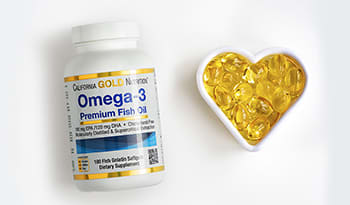
Omega-3 fatty acids, also known as polyunsaturated fatty acids or PUFAs, play an important role in overall human health. They are believed to have numerous benefits for the heart, brain, gut, and joints. Omega-3 fatty acids may also help support healthy blood pressure already within the normal range. These important nutrients can be found in a variety of food sources, including krill oil, fish (mackerel, cod, and salmon are among the richest), walnuts, chia seeds, flax seeds, hemp seeds, avocado, and natto.
A 2009 randomized controlled trial published in the Journal of Hypertension showed that omega-3 fatty acids could help support healthy blood pressure already within the normal range when taken at a dose of 4 grams (4,000 mg) per day. A 2014 study in the American Journal of Hypertension showed that DHA/EPA supported healthy systolic and diastolic levels. In total, 70 randomized controlled trials were evaluated in this 2014 study.
Lastly, a 2016 study in the Journal of Nutrition showed that consumption of fish oil at a dose as low as 700 mg per day could significantly support healthy blood pressure already within the normal range. According to a 2017 study, omega-3 fatty acids resulted in significant improvements in vascular function and a reduction in blood pressure.
Suggested dose: 1,000 mg to 4000 mg per day.
Vitamin C (Ascorbic Acid)
Vitamin C, also known as ascorbic acid or ascorbate, has been one of the most researched vitamins over the last 50 years. A search of the scientific literature reveals that over 53,000 studies have been conducted on vitamin C since the late 1960s. Their findings show that it helps promote a strong immune system as well as cardiovascular, brain, and skin health, among many other benefits. Supporting healthy blood pressure may also be beneficial, and, conversely, low vitamin C levels are associated with high blood pressure.
A 2000 study in the Journal of Hypertension found that in older adults, high intakes of ascorbic acid have modest effects on supporting healthy blood pressure levels already within the normal range.
Likewise, a 2012 study concluded that vitamin C supplementation could support healthy systolic and diastolic values. The study reviewed 29 trials and provided significant support for cardiovascular health and healthy blood flow. The typical dose of vitamin C taken was 500 mg per day.
Suggested dose: 500 to 1,000 mg per day.
References:
- Charles N. Alexander, Robert H. Schneider, et. al. Trial of Stress Reduction for Hypertension in Older African Americans: II. Sex and Risk Subgroup Analysis Hypertension 28: 228-237, doi:10.1161/01.HYP.28.2.228
- British Journal of Nutrition. 2012 Dec 14;108(11):2066-74.
- Mario Siervo, Jose Lara, Ikponmwonsa Ogbonmwan, John C. Mathers, Inorganic Nitrate and Beetroot Juice Supplementation Reduces Blood Pressure in Adults: A Systematic Review and Meta-Analysis, The Journal of Nutrition, Volume 143, Issue 6, June 2013, Pages 818–826, https://doi.org/10.3945/jn.112.170233
- Nutr Res. 2014 Oct;34(10):868-75. doi: 10.1016/j.nutres.2014.09.007. Epub 2014 Sep 28.
- Eur J Nutr. 2016 Mar;55(2):451-459. doi: 10.1007/s00394-015-0872-7. Epub 2015 Mar 13.
- Bahadoran Z, Mirmiran P, Kabir A, Azizi F, Ghasemi A. The Nitrate-Independent Blood Pressure-Lowering Effect of Beetroot Juice: A Systematic Review and Meta-Analysis [published correction appears in Adv Nutr. 2018 May 1;9(3):274]. Adv Nutr. 2017;8(6):830–838. Published 2017 Nov 15. doi:10.3945/an.117.016717
- J Hum Hypertens. 2007 Apr;21(4):297-306. Epub 2007 Feb 8.
- J Sports Med Phys Fitness. 2015 Jul-Aug;55(7-8):797-804. Epub 2014 Nov 4.
- http://www.mayoclinic.org/drugs-supplements/coenzyme-q10/evidence/hrb-20059019
- Nutraceuticals for blood pressure control Cesare R. Sirtori, Anna Arnoldi & Arrigo F. G. Cicero Annals of Medicine Vol. 47 , Iss. 6,2015
- Phytother Res. 2002 Feb;16(1):48-54.
- Walker AF, Marakis G, Simpson E, et al. Hypotensive effects of hawthorn for patients with diabetes taking prescription drugs: a randomised controlled trial. Br J Gen Pract. 2006;56(527):437–443.
- J Am Diet Assoc. 2011 Aug;111(8):1173-81. doi: 10.1016/j.jada.2011.05.015.
- Zhang H, Liu S, Li L, et al. The impact of grape seed extract treatment on blood pressure changes: A meta-analysis of 16 randomized controlled trials. Medicine (Baltimore). 2016;95(33):e4247. doi:10.1097/MD.0000000000004247
- J Med Food. 2018 May;21(5):445-453. doi: 10.1089/jmf.2017.0133. Epub 2018 Apr 23.
- J Hypertens. 2005 Feb;23(2):427-34.
- Am Heart J. 2011 Dec;162(6):959-65. doi: 10.1016/j.ahj.2011.09.012. Epub 2011 Nov 8.
- Reule CA, Goyvaerts B, Schoen C. Effects of an L-arginine-based multi ingredient product on endothelial function in subjects with mild to moderate hypertension and hyperhomocysteinemia - a randomized, double-blind, placebo-controlled, cross-over trial. BMC Complement Altern Med. 2017;17(1):92. Published 2017 Feb 2. doi:10.1186/s12906-017-1603-9
- Menzel D, Haller H, Wilhelm M, Robenek H. L-Arginine and B vitamins improve endothelial function in subjects with mild to moderate blood pressure elevation. Eur J Nutr. 2018;57(2):557–568. doi:10.1007/s00394-016-1342-6
- Workinger JL, Doyle RP, Bortz J. Challenges in the Diagnosis of Magnesium Status. Nutrients. 2018;10(9):1202. Published 2018 Sep 1. doi:10.3390/nu10091202
- Foods, fortificants, and supplements: Where do Americans get their nutrients?
- Fulgoni VL 3rd, Keast DR, Bailey RL, Dwyer J J Nutr. 2011 Oct; 141(10):1847-54.
- J Clin Hypertens (Greenwich). 2011 Nov;13(11):843-7. doi: 10.1111/j.1751-7176.2011.00538.x. Epub 2011 Sep 26.
- Dibaba DT, Xun P, Song Y, Rosanoff A, Shechter M, He K. The effect of magnesium supplementation on blood pressure in individuals with insulin resistance, prediabetes, or noncommunicable chronic diseases: a meta-analysis of randomized controlled trials. Am J Clin Nutr. 2017;106(3):921–929. doi:10.3945/ajcn.117.155291
- J Hypertens. 2009 Sep;27(9):1863-72
- Miller PE, Van Elswyk M, Alexander DD. Long-chain omega-3 fatty acids eicosapentaenoic acid and docosahexaenoic acid and blood pressure: a meta-analysis of randomized controlled trials. Am J Hypertens. 2014;27(7):885–896. doi:10.1093/ajh/hpu024
- J Nutr. 2016 Mar;146(3):516-23. doi: 10.3945/jn.115.220475. Epub 2016 Jan 27.
- Nutr Metab Cardiovasc Dis. 2017 Mar;27(3):191-200. doi: 10.1016/j.numecd.2016.07.011. Epub 2016 Jul 26.
- Journal of Hypertension. 2000 Apr;18(4):411-5.
- Juraschek SP, Guallar E, Appel LJ, Miller ER 3rd. Effects of vitamin C supplementation on blood pressure: a meta-analysis of randomized controlled trials. Am J Clin Nutr. 2012;95(5):1079–1088. doi:10.3945/ajcn.111.027995
DISCLAIMER:
These statements have not been approved by the Food and Drug Administration. These products are not intended to diagnose, treat, cure, or prevent disease.


























































 Table of Contents