Quick Answer
Micronized creatine is creatine monohydrate processed into smaller particles for better mixability. While it dissolves faster and creates a smoother drink, current research shows it provides the same muscle-building, strength, and performance benefits as standard creatine monohydrate when taken at the same dose.
Key Takeaways
- Micronized creatine and regular creatine monohydrate contain the same active ingredient.
- Smaller particles improve mixability but not muscle absorption or effectiveness.
- A daily dose of 3–5 g is effective for most healthy adults.
- A loading phase is optional and only speeds up muscle saturation.
- Creatine monohydrate remains the most researched and clinically supported form of creatine.
What is micronized creatine?
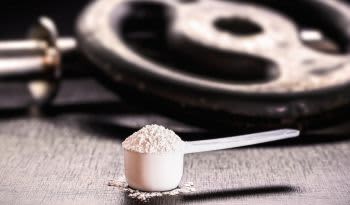
Micronized creatine is creatine monohydrate that's been mechanically ground into a much smaller particle size than standard powder — think granulated sugar versus powdered sugar. The ingredient doesn't change, only the grain size. Manufacturers reduce conventional creatine particles, typically 180–250 microns wide, down to roughly 75 microns or smaller through mechanical milling or jet-milling. In lab research, an even finer result — particles under 20 microns — has been produced using a supercritical-fluid process called rapid expansion of supercritical solution (Hezave et al., 2010).
Why bother? Creatine monohydrate has limited water solubility on its own, dissolving at about 13 grams per liter at room temperature. Cutting particle size increases the surface area exposed to water, which speeds up dissolution. That's the entire purpose of micronization: a smoother drink, not a different molecule.
Is micronized creatine different from creatine monohydrate?
Micronized creatine is not a separate form of creatine, the way creatine HCl or creatine ethyl ester are. It's the same compound as creatine monohydrate, but it runs through an extra processing step. A certificate of analysis shows the same molecular formula, purity standard, and creatine content per gram whether the label says "micronized" or not. What changes are physical structure: grain size, how it settles in liquid, and mouthfeel.
If a label implies micronized creatine is more potent per gram, that claim deserves a second look — gram-for-gram potency is set by purity, not particle size.
How does micronized creatine compare to regular monohydrate?
Particle size
- Regular Monohydrate: ~180–250 microns (80 mesh)
- Micronized Creatine: ~75 microns or smaller (200+ mesh)
Solubility in water
- Regular Monohydrate: Slower; often settles, needs stirring
- Micronized Creatine: Faster; minimal residue
Texture
- Regular Monohydrate: Can feel gritty
- Micronized Creatine: Smooth, less grit
Stomach comfort
- Regular Monohydrate: Mild GI upset possible at high doses
- Micronized Creatine: Same risk at high doses; some users report less grit-related discomfort
Absorption/muscle uptake
- Regular Monohydrate: No documented disadvantage
- Micronized Creatine: No documented advantage over standard monohydrate (Kreider et al., 2017)
Effectiveness for strength & muscle gain
- Regular Monohydrate: Identical — same active compound
- Micronized Creatine: Identical — same active compound
Water retention
- Regular Monohydrate: Same modest, expected increase
- Micronized Creatine: Same modest, expected increase
Research support
- Regular Monohydrate: Most-studied creatine form in existence
- Micronized Creatine: Same compound; the micronization process itself is studied separately (Hezave et al., 2010)
Typical price per serving
- Regular Monohydrate: Usually lower
- Micronized Creatine: Often $0.05–$0.15 higher per serving
Overall best for
- Regular Monohydrate: Budget-focused users who don't mind stirring
- Micronized Creatine: Users sensitive to texture or mixing with less liquid
Micronized creatine: pros and cons
Pros
- Mixes smoother, less grit
- Easier to drink with less liquid
- May feel gentler on sensitive stomachs
- Wide availability, including flavored options
Cons
- Costs slightly more per serving
- No extra muscle gain over standard monohydrate
- Same effectiveness as standard monohydrate — not an upgrade in results
- Marketing sometimes overstates absorption claims
Choose micronized creatine if:
- You dislike gritty powder or clumping at the bottom of the glass.
- You mix creatine with plain water rather than a thick shake.
- You don't mind paying a little more per serving for texture.
Choose regular creatine monohydrate if:
- Price per gram is your main priority.
- You don't mind stirring a bit longer, or mixing into a shake that masks grit.
- You want identical performance at the lowest cost.
Is micronized creatine better than monohydrate?
"Better" depends on the goal. For strength, lean mass, or performance, the International Society of Sports Nutrition has concluded that creatine monohydrate is the most effective and most studied form available, with no other form — including micronized versions — showing superior muscle uptake (Kreider et al., 2017). For "which mixes better in my shaker," micronized usually wins.
One nuance worth flagging: a handful of manufacturer-funded comparisons report higher bioavailability for specific enhanced or buffered creatine blends, including a claimed 38.97% bioavailability increase for one branded formulation versus standard micronized creatine. These figures tend to come from industry-sponsored trials rather than independent, peer-reviewed human research — treat them as marketing claims pending replication, not settled science.
Which should you choose: creatine monohydrate or micronized?
If cost matters most, regular monohydrate is typically cheaper per gram and performs identically in the body. If you've struggled with gritty texture or stomach discomfort from undissolved powder, micronized creatine solves that without costing you anything in effectiveness. Many people simply buy whichever jar is on sale, since the outcome that matters — total grams of creatine consumed daily — stays the same either way.
Does micronized creatine dissolve better in water?
Yes — and this is the one micronization claim that's well supported by basic physical chemistry, not just marketing copy. Smaller particles expose more surface area to liquid and resist settling, which is why micronized powders leave less residue after a quick stir. Standard monohydrate dissolves fully, too; it just needs more stirring or warmer liquid to get there. A glass with some undissolved powder at the bottom still delivers its full creatine content once you finish and rinse the glass.
Does micronized creatine absorb faster than regular creatine?
This is where the evidence gets cautious. Dissolving faster in a glass of water isn't the same biological event as crossing the intestinal wall. Once creatine is fully dissolved, the body handles it the same way regardless of starting particle size. Research using isotope-labeled creatine found oral bioavailability is dose-dependent rather than particle-size-dependent — roughly 53% at lower doses and only about 16% at higher doses in animal pharmacokinetic modeling, suggesting intestinal transporter saturation, not particle size, is the real bottleneck (Alraddadi et al., 2018). That study was conducted in rats, so the exact percentages shouldn't be assumed to transfer directly to humans, but the underlying mechanism lines up with broader human creatine research.
In summary: micronization speeds up dissolution in your glass. It hasn't been shown to meaningfully speed up or increase absorption inside your body.
What are the benefits of micronized creatine?
Micronized creatine carries the same well-documented benefits as standard monohydrate, since the active ingredient is identical: improved high-intensity exercise capacity, greater lean mass gains alongside resistance training, faster recovery, and a possible role in cognitive support (Kreider et al., 2017). What micronization adds is purely user experience — smoother mixing, less grit, easier mixing with smaller amounts of liquid or a whey protein shake.
Muscle Strength and Performance
Creatine tops up the muscle's phosphocreatine stores, tapped during short, high-intensity bursts like sprinting, jumping, or heavy lifting. Decades of research point to creatine monohydrate as the most effective legal ergogenic supplement currently available for high-intensity exercise capacity and lean mass gains during training (Kreider et al., 2017). Micronized creatine improves strength to the same degree, since gains come from creatine reaching and saturating muscle tissue — not from how finely the original powder was ground. Muscles can't tell the difference between a particle that started at 250 microns and one that started at 20 microns once it's dissolved.
Possible Cognitive Effects
The evidence on creatine and brain function is genuinely mixed, and particle size has no bearing on it either way. A 2024 systematic review and meta-analysis of 16 randomized trials found that creatine supplementation improved memory and processing speed, though not overall cognitive function or executive function specifically (Xu et al., 2024). When the European Food Safety Authority's expert panel evaluated that same evidence for a formal health claim in 2024, it found a statistical problem: the meta-analysis pooled multiple related test scores from the same participants as if they were independent results, inflating the apparent sample size. The panel concluded no firm conclusion could be drawn for a health claim (EFSA NDA Panel, 2024).
Plain-language version: There's a real, biologically plausible signal that creatine may support memory, especially under high cognitive demand, but it isn't proven at the level needed for confident claims. Treat any cognitive benefit as possible, not guaranteed — and don't expect micronized creatine specifically to outperform standard monohydrate here, since both deliver the same molecule to the brain.
What to look for when buying micronized creatine
Not every micronized creatine jar is equal, and a few label checks separate a good buy from a wasted one:
- Purity: Look for 99.9%+ creatine monohydrate purity (sometimes listed as "HPLC tested" or with a specific assay percentage). Lower purity means more filler per scoop.
- Third-party testing: Independent verification (NSF Certified for Sport, Informed Sport, or a clearly stated banned-substance testing program) matters most for competitive athletes, but it's a reasonable quality signal for anyone.
- Creapure vs. generic: Creapure is a specific German-manufactured creatine monohydrate raw material known for tight quality control. A brand's micronized creatine may or may not be Creapure-sourced. Check the label or the company's current sourcing statement, since this can change between batches.
- Unflavored vs. flavored: Unflavored micronized creatine mixes invisibly into a pre-workout drink or whey shake without altering taste. Flavored versions are easier to take on their own with water, but cost slightly more per serving and aren't meant to be mixed into other flavored products.
- Serving size and per-serving cost: Confirm the label lists 5 g of creatine monohydrate per scoop — some "creatine blend" products dilute that with other ingredients. Compare price per serving, not just price per container.
How much micronized creatine should you take per day?
Two proven protocols exist, and both reach the same destination (Kreider et al., 2017):
Loading phase
- Dose: ~0.3 g/kg body weight/day, split into 4 doses
- Duration: 5–7 days
- Time to Full Saturation: 5–7 days
Maintenance (after loading)
- Dose: 3–5 g/day
- Duration: Ongoing
- Time to Full Saturation: Already saturated
No-loading / gradual
- Dose: 3–5 g/day from day one
- Duration: Ongoing
- Time to Full Saturation: ~3–4 weeks
For someone weighing roughly 80 kg (176 lb), loading works out to about 24 g/day split into four 6 g servings for the first week. After that — or if you skip loading entirely — 3 to 5 g once daily keeps stores topped off indefinitely.
Dosing doesn't need to be adjusted by sex. Women have 70–80% lower natural creatine stores than men on average, but respond through the same physiological pathways and benefit from the same 3–5 g maintenance range (Smith-Ryan et al., 2021).
Should you do a loading phase with micronized creatine?
Only if you want full muscle saturation faster — about a week instead of a month. Loading isn't required; it's a shortcut. The trade-off: higher single-day doses (often 20–25 g split across four or five servings) are somewhat more likely to cause mild digestive upset. If you're not in a rush, skipping the loading phase and going straight to 3–5 g daily is an equally effective, gentler path to the same endpoint.
What happens if you skip the loading phase?
It simply takes longer — about three to four weeks instead of five to seven days — to reach the same saturated muscle creatine level (Kreider et al., 2017). Nothing is lost; eventual benefits to strength, power, and lean mass are the same once saturation is reached, and the gradual approach is easier on the stomach since you're never taking more than a standard 3–5 g serving at once.
Does micronized creatine have side effects?
Yes, the same profile as regular monohydrate, since the two are chemically identical. The most common issues are mild and gastrointestinal — bloating, cramping, or loose stool — usually tied to a large single dose (especially during loading) rather than the standard daily 3–5 g (Naderi et al., 2019). A modest, expected amount of early water-weight gain is also common, reflecting more water drawn into muscle tissue alongside the creatine. Some people report fewer digestive complaints with micronized versions specifically, a plausible explanation that hasn't been isolated and tested head-to-head against standard monohydrate in a controlled trial.
Who should avoid taking micronized creatine?
People with pre-existing kidney disease and pregnant individuals should talk to a physician first, since supplementation hasn't been specifically studied in those groups (Naderi et al., 2019). Outside those situations, the safety data for healthy adults is extensive and reassuring.
A persistent myth links creatine to kidney damage in healthy people. A 2025 systematic review and meta-analysis pooling 21 studies found a small, statistically detectable rise in serum creatinine but no meaningful change in glomerular filtration rate — the more reliable marker of actual kidney function (Naeini et al., 2025). A separate narrative review reached a similar conclusion: the creatinine rise reflects normal creatine metabolism, not kidney injury, and case reports linking creatine to kidney failure mostly involved people with pre-existing conditions or other complicating factors (Longobardi et al., 2023). If a doctor monitors your kidney markers, mention your creatine use so a slightly elevated creatinine reading gets interpreted in context.
Can you take micronized creatine powder every day long-term?
Yes — daily, indefinite use is how the supplement is designed to work, since creatine works through accumulation in muscle tissue, not single-dose effects. Research has tracked supplementation periods of up to five years at doses as high as 30 g/day in healthy individuals without significant adverse health markers (Kreider et al., 2017). Most people use a far smaller daily dose, 3–5 g, indefinitely with no required cycling-off period. Some athletes take planned breaks anyway around competition scheduling, but there's no documented performance or safety benefit to doing so.
FAQ
Is micronized creatine better than regular creatine?
Not in effectiveness. Both deliver the same active ingredient at the same dose. Micronized creatine wins only on mixing texture. Research hasn't shown micronized creatine to be absorbed better or to produce greater strength gains than standard monohydrate (Kreider et al., 2017). If you've never had clumping or settling issues with regular monohydrate, you're not missing an extra benefit by sticking with it — this is a texture preference, not a performance edge.
Does micronized creatine dissolve better than creatine monohydrate?
Yes. Its smaller particle size increases surface area, so it dissolves faster with less residue. Creatine monohydrate dissolves fully, too — it just needs more stirring or warmer liquid. Either version delivers its full creatine content once you finish the drink.
Is micronized creatine safe to take every day?
Yes, for healthy adults without kidney disease, daily use at 3–5 g is well supported by long-term safety data. Studies have tracked supplementation for up to five years without significant adverse health markers (Kreider et al., 2017). If you have a kidney condition, are pregnant, or manage a chronic illness, check with a doctor first, since those groups haven't been extensively studied.
Does micronized creatine cause bloating or stomach issues?
It can, mainly at high doses like a loading phase, not at the standard 3–5 g maintenance dose. Most people tolerate creatine well at maintenance doses. Some report fewer stomach issues with micronized versions specifically, likely because finer particles dissolve more completely before reaching the gut, though this hasn't been formally tested head-to-head.
How long does it take for micronized creatine to start working?
About a week with a loading phase, or three to four weeks with steady daily dosing. With loading (~20–25 g/day for 5–7 days), muscle stores reach full saturation within roughly a week. Without loading, taking a steady 3–5 g daily reaches the same saturation point in about three to four weeks (Kreider et al., 2017). Either path arrives at the same result; loading just gets you there faster.
Can you mix micronized creatine with water only, or does it need juice?
Water alone is enough. That's the whole point of micronization. Some people still mix it into juice or a post-workout shake for taste, since unflavored creatine has a mild, slightly bitter profile on its own, but that's a flavor choice, not an absorption requirement.
Do you need to cycle off micronized creatine?
No. Continuous daily use is supported by long-term safety data with no required break. Studies running for several years at recommended and even much higher doses haven't shown a need for scheduled breaks (Kreider et al., 2017). Some people cycle anyway around competition timing, but there's no documented benefit to it.
Can women take micronized creatine the same way as men?
Yes. The standard 3–5 g daily dose applies equally to both. Women naturally carry 70–80% lower endogenous creatine stores than men, which, if anything, makes supplementation comparably impactful, and research confirms women respond through the same biological pathways with similar strength and lean-mass benefits (Smith-Ryan et al., 2021).
Does micronized creatine affect kidney health?
No meaningful negative effect has been shown in healthy people without existing kidney disease. A small, expected rise in serum creatinine is common, since creatine is naturally metabolized into creatinine, but glomerular filtration rate — the actual measure of kidney function — hasn't shown a meaningful change across controlled research (Naeini et al., 2025; Longobardi et al., 2023). People with pre-existing kidney conditions should still consult a doctor first.
The bottom line
Micronized creatine is regular creatine monohydrate with one upgrade: a finer particle size that mixes more easily and leaves less grit in your glass. It carries the same well-established benefits for strength, lean mass, and exercise performance as standard monohydrate, the same still-debated evidence around memory and cognitive support, and the same strong safety profile at the standard 3–5 g daily dose. If smooth mixing matters to you, micronized creatine is a sensible upgrade; if you're optimizing purely for cost per gram, non-micronized monohydrate gets you to the same physiological result.
Whichever you pick, consistency matters more than the particle size on the label — daily use over weeks and months is what actually saturates your muscle creatine stores. Browse iHerb's full creatine range, including creatine HCl, our best creatine supplements roundup, and whey protein for stacking, to compare verified-purity options.
References:
- Alraddadi, E. A., Lillico, R., Vennerstrom, J. L., Lakowski, T. M., & Miller, D. W. (2018). Absolute oral bioavailability of creatine monohydrate in rats: Debunking a myth. Pharmaceutics, 10(1), 31. https://doi.org/10.3390/pharmaceutics10010031
- EFSA Panel on Nutrition, Novel Foods and Food Allergens (NDA). (2024). Creatine and improvement in cognitive function: Evaluation of a health claim pursuant to Article 13(5) of Regulation (EC) No 1924/2006. EFSA Journal, 22(11), e9100. https://doi.org/10.2903/j.efsa.2024.9100
- Hezave, A. Z., Aftab, S., & Esmaeilzadeh, F. (2010). Micronization of creatine monohydrate via rapid expansion of supercritical solution (RESS). The Journal of Supercritical Fluids, 55(1), 316–324. https://doi.org/10.1016/j.supflu.2010.05.009
- Kreider, R. B., Kalman, D. S., Antonio, J., Ziegenfuss, T. N., Wildman, R., Collins, R., Candow, D. G., Kleiner, S. M., Almada, A. L., & Lopez, H. L. (2017). International Society of Sports Nutrition position stand: Safety and efficacy of creatine supplementation in exercise, sport, and medicine. Journal of the International Society of Sports Nutrition, 14, 18. https://doi.org/10.1186/s12970-017-0173-z
- Longobardi, I., Gualano, B., Seguro, A. C., & Roschel, H. (2023). Is it time for a requiem for creatine supplementation-induced kidney failure? A narrative review. Nutrients, 15(6), 1466. https://doi.org/10.3390/nu15061466
- Naderi, A., de Oliveira, E. P., de Oliveira, G. V., & Caparbo, V. F. (2019). Creatine supplementation and kidney health. Journal of Renal Nutrition, 29(6), 448–456.
- Naeini, E. K., Eskandari, M., Mortazavi, M., Gholaminejad, A., & Karevan, N. (2025). Effect of creatine supplementation on kidney function: A systematic review and meta-analysis. BMC Nephrology, 26, 622. https://doi.org/10.1186/s12882-025-04558-6
- de Guingand, D. L., Palmer, K. R., Snow, R. J., Davies-Tuck, M. L., & Ellery, S. J. (2020). Risk of adverse outcomes in females taking oral creatine monohydrate: A systematic review and meta-analysis. Nutrients, 12(6), 1780.
- Smith-Ryan, A. E., Cabre, H. E., Eckerson, J. M., & Candow, D. G. (2021). Creatine supplementation in women's health: A lifespan perspective. Nutrients, 13(3), 877. https://doi.org/10.3390/nu13030877
- Xu, C., Bi, S., Zhang, W., & Luo, L. (2024). The effects of creatine supplementation on cognitive function in adults: A systematic review and meta-analysis. Frontiers in Nutrition, 11, 1424972. https://doi.org/10.3389/fnut.2024.1424972
DISCLAIMER:
These statements have not been approved by the Food and Drug Administration. These products are not intended to diagnose, treat, cure, or prevent disease.


























































 Table of Contents